<>
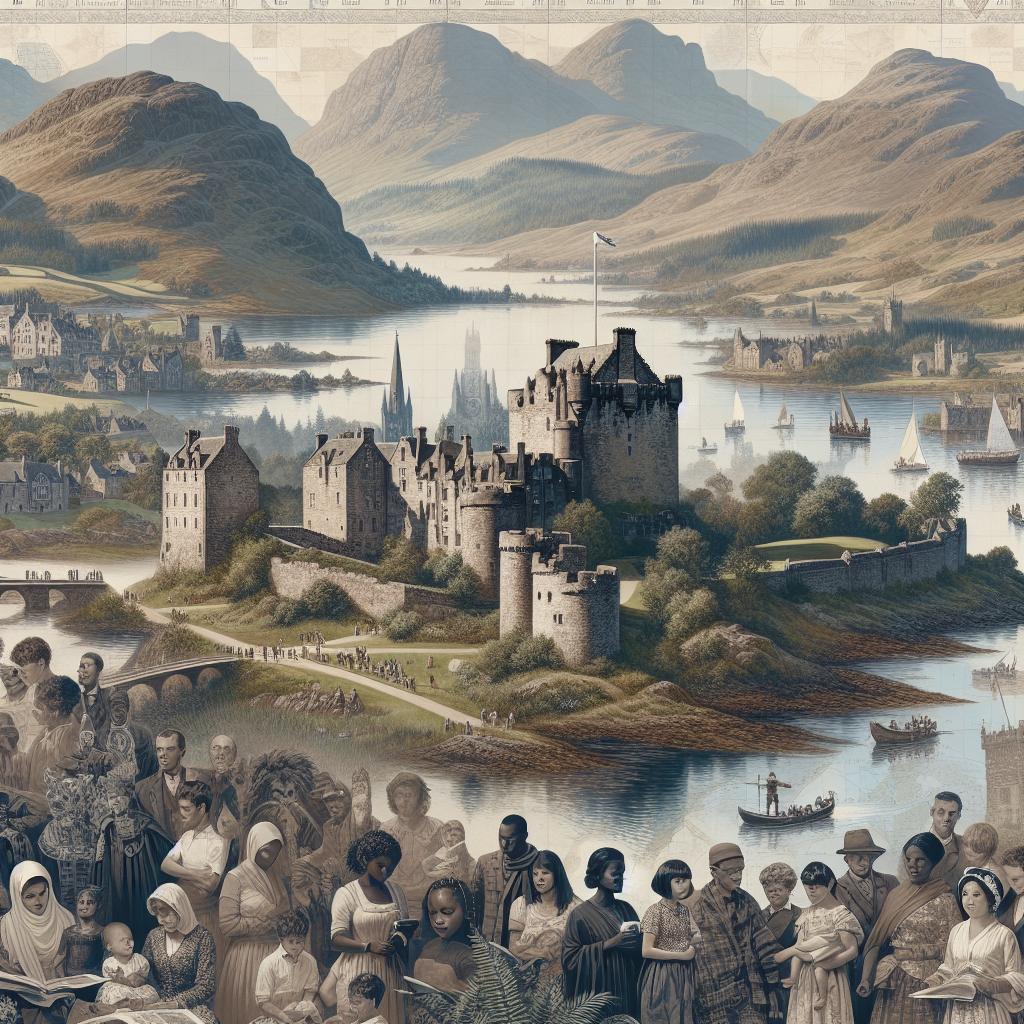
Scotland, with its rich artistic heritage and tumultuous history, has birthed some of the world’s most influential painters. From the Baroque elegance of the 17th century to the dynamic modernism of the 20th century, Scottish artists have continuously pushed artistic boundaries, often weaving the country’s unique culture, history, and landscapes into their work. In this blog post, we’ll dive into the lives and masterpieces of some of the most famous Scottish painters, spotlighting their contributions to the world of art. We’ll traverse through centuries, exploring the work of George Jamesone, John Michael Wright, Allan Ramsay, Gavin Hamilton, Henry Raeburn, David Wilkie, Charlotte Nasmyth, Mary Cameron, and John Duncan Fergusson. Additionally, we’ll touch upon the collective impact of the Glasgow Boys & Girls on the art world.
George Jamesone (1587-1644)
Often hailed as Scotland’s first significant portrait painter, George Jamesone was a key figure in the emergence of an indigenous style of painting in Scotland. Born in Aberdeen, Jamesone trained under the influence of Flemish portraiture, incorporating its elaborate detail and lifelike depictions. Jamesone’s success lay in his ability to capture the elegance and personality of his subjects. His portraits of Scottish nobility, including King Charles I, exude a refined sophistication that was previously unseen in Scottish art. Self-portraits, family groups, and historical figures round out his oeuvre, testifying to his versatility. He successfully combined technical expertise with an intuitive sense for character, setting the stage for future generations of Scottish painters.
John Michael Wright (1617-1694)
Although less well-known than some of his contemporaries, John Michael Wright played a crucial role in both the Scottish and English art scenes during the Baroque period. Wright, who was born in Scotland but trained in Rome, blended Italianate influences with Northern European realism. His masterful use of chiaroscuro and attention to intricate details reflect his deep understanding of Caravaggio’s dramatic realism and Poussin’s controlled compositions. Wright’s legacy is best exemplified by his compelling portraits of English nobility and his elaborate, symbolic compositions, which demonstrate not only a mastery of technical skills but also a sophisticated grasp of symbolic representation. His work provided a bridge between the grandeur of the Italian Renaissance and the emerging vernacular styles of British art.
Allan Ramsay (1713-1784)
Allan Ramsay was a seminal figure in 18th-century portrait painting, celebrated for his entries into the Romantic era of art. Born into a family dedicated to the arts, Ramsay honed his skills in Edinburgh before moving to London and Rome, where he absorbed the lessons of the great masters. Ramsay was appointed as the Principal Painter in Ordinary to King George III, creating portraits that not only depicted an accurate likeness but also emanated a sense of grace and elegance. His pioneering use of soft, diffused light and his attention to detailed fabric textures set his work apart. His most enduring legacy lies in his ability to humanize his subjects, capturing both their outer refinement and inner depth.
Gavin Hamilton (1723-1798)
Gavin Hamilton was a multifaceted artist who managed to merge his skills as a history painter and an archaeologist. Born into an aristocratic family in Lanarkshire, Hamilton spent much of his life in Rome, where he immersed himself in the study of classical antiquity—a passion that deeply influenced his artistic output. Hamilton is best known for his grand history paintings, which often depicted scenes from classical mythology and history with painstaking attention to archaeological accuracy. These paintings were not only works of art but also educational tools, intended to inspire moral and cultural reflection. His scholarly approach to painting made him a pioneer in the Neoclassical movement, blending academic rigor with artistic skill.
Henry Raeburn (1756-1823)
Henry Raeburn is among Scotland’s most celebrated portrait painters, known for his vivid, dynamic representations of the Scottish Enlightenment’s leading figures. Trained initially as a jeweler, Raeburn switched to portraiture and remained largely self-taught, a testament to his incredible natural talent. Raeburn’s portraits are characterized by their robust realism and psychological depth. His most famous work, “The Skating Minister,” exemplifies his skill at capturing movement and personality. Raeburn’s affinity for dramatic lighting and bold, confident brushwork set his portraits apart, cementing his place as one of Scotland’s artistic greats.
David Wilkie (1785-1841)
A pioneer of genre painting in Scotland, David Wilkie’s work often depicted scenes of everyday life imbued with emotional depth and social commentary. After training at the Royal Academy in London, Wilkie quickly gained acclaim for his skillful storytelling and technical proficiency. Wilkie’s ability to capture the subtleties of human interaction made his paintings both relatable and profound. His works like “The Blind Fiddler” and “The Chelsea Pensioners Receiving the Gazette of the Battle of Waterloo” are considered masterpieces of genre painting. Wilkie’s influence extended far beyond Scotland, impacting the development of genre painting in European art as a whole.
Charlotte Nasmyth (1804-1884)
Charlotte Nasmyth was part of a notable artistic family and made her mark as a distinguished landscape painter. Born in Edinburgh, she was the daughter of Alexander Nasmyth, an accomplished artist himself. Under her father’s tutelage, Charlotte developed a keen eye for detail and a knack for capturing the sublime beauty of the Scottish countryside. Nasmyth’s landscapes often depicted idyllic rural scenes, imbued with a sense of tranquility and balance. Her ability to capture the changing moods of nature with subtlety and finesse set her apart as a leading female artist in an era where the field was predominantly male. She remains a testament to the often-overlooked contributions of women to Scottish art.
Mary Cameron (1865-1921)
Mary Cameron broke new ground as a female artist at a time when the art world was heavily dominated by men. Trained in Edinburgh and Paris, Cameron was especially known for her strong and expressive brushwork, as well as her intriguing subject matter. Although she painted a range of subjects, Cameron is perhaps best known for her large-scale depictions of Spanish life and culture. Her ability to convey emotion and energy through her paintings of Spanish dancers, bullfighters, and market scenes demonstrated her commitment to capturing the vibrancy of life. Cameron’s work not only showcased her technical skill but also her profound engagement with the cultural environments she observed.
John Duncan Fergusson (1874-1961)
One of the leaders of the Scottish Colourists, John Duncan Fergusson was instrumental in introducing the vibrancy of French Impressionism and Post-Impressionism to Scotland. Educated in Paris, Fergusson was heavily influenced by the avant-garde movements of his time. Fergusson’s work is noted for its bold use of color and modernist sensibilities. His paintings of landscapes, still lifes, and portraits reflected a unique synthesis of Scottish tradition and contemporary European styles. By blending impressionistic techniques with fauvist color schemes, Fergusson’s work played a pivotal role in shaping modern Scottish art.
The Glasgow Boys & Girls (1880s-1890s)
The Glasgow Boys & Girls were a group of young, innovative artists who sought to break away from the conservative, academic traditions of the 19th century Scottish art scene. This loose collective included names like James Guthrie, John Lavery, and E. A. Hornel among the men, while Bessie MacNicol and others represented the female artists. Inspired by French Realism and the Barbizon School, the Glasgow Boys & Girls embraced plein air painting and sought to capture the realities of rural Scottish life. They experimented with bold colors, fluid brushwork, and innovative compositions. Their works, which ranged from landscapes to social scenes, stood as a testament to the dynamic energy of Scottish art during a period of significant cultural transformation.
Related Posts
Auspicious characters: the meaning of animals in Chinese art
Dive deep into the symbolism behind animal depictions in traditional Chinese art. Understand how different creatures represent various virtues and are woven into the cultural tapestry of Chinese history.
Treasured playmates: the history, care, and restoration of soft toys
Explore the endearing history of soft toys, their sentimental value, and contemporary methods for their preservation and restoration.
Romanov opulence: the history, value, and restoration of Fabergé Eggs
An exploration of the luxurious world of Fabergé Eggs, from their creation for Russian royalty to their modern-day value and intricate restoration processes.
Icon panels: preserving and restoring traditional orthodox art
A look at the sacred and historical significance of orthodox icon panels, with insights into the meticulous techniques used in their preservation and restoration.
Documenting D-Day: preserving Second World War artefacts
A tribute to the artefacts from D-Day, focusing on the methods used to preserve these pivotal pieces of history for future generations.
The Army and Navy Club: restoring the faces of military history
A focus on the intricate restoration projects aimed at preserving the portraits and memorabilia housed in one of the most prestigious military clubs.
How can we help?
Contact us
If you’re looking for more information or have queries regarding art preservation, reach out to us. Our dedicated team is always here to assist you with expert advice and services.
| Painters | Key Contributions | Influence |
|---|---|---|
| George Jamesone | First notable Scottish portraitist | Inspired subsequent generations of Scottish painters |
| John Michael Wright | Pioneered Baroque portraiture in Britain | Blended Italian and Northern European styles |
| Allan Ramsay | Principal Painter to King George III | Introduced Romanticism to Scottish portraiture |
| Gavin Hamilton | Integrated archaeology into history painting | Early proponent of Neoclassicism |
| Henry Raeburn | Renowned for robust, dynamic portraits | Prominent figure of the Scottish Enlightenment |
| David Wilkie | Master of genre painting | Influenced genre painting across Europe |
| Charlotte Nasmyth | Acclaimed landscape painter | Pioneering female artist in a male-dominated field |
| Mary Cameron | Painted vibrant Spanish cultural scenes | Demonstrated cultural and gender barriers could be transcended |
| John Duncan Fergusson | Leader of Scottish Colourists | Blended Scottish tradition with European modernism |
| The Glasgow Boys & Girls | Innovators of plein air painting in Scotland | Critically transformed 19th-century Scottish art |